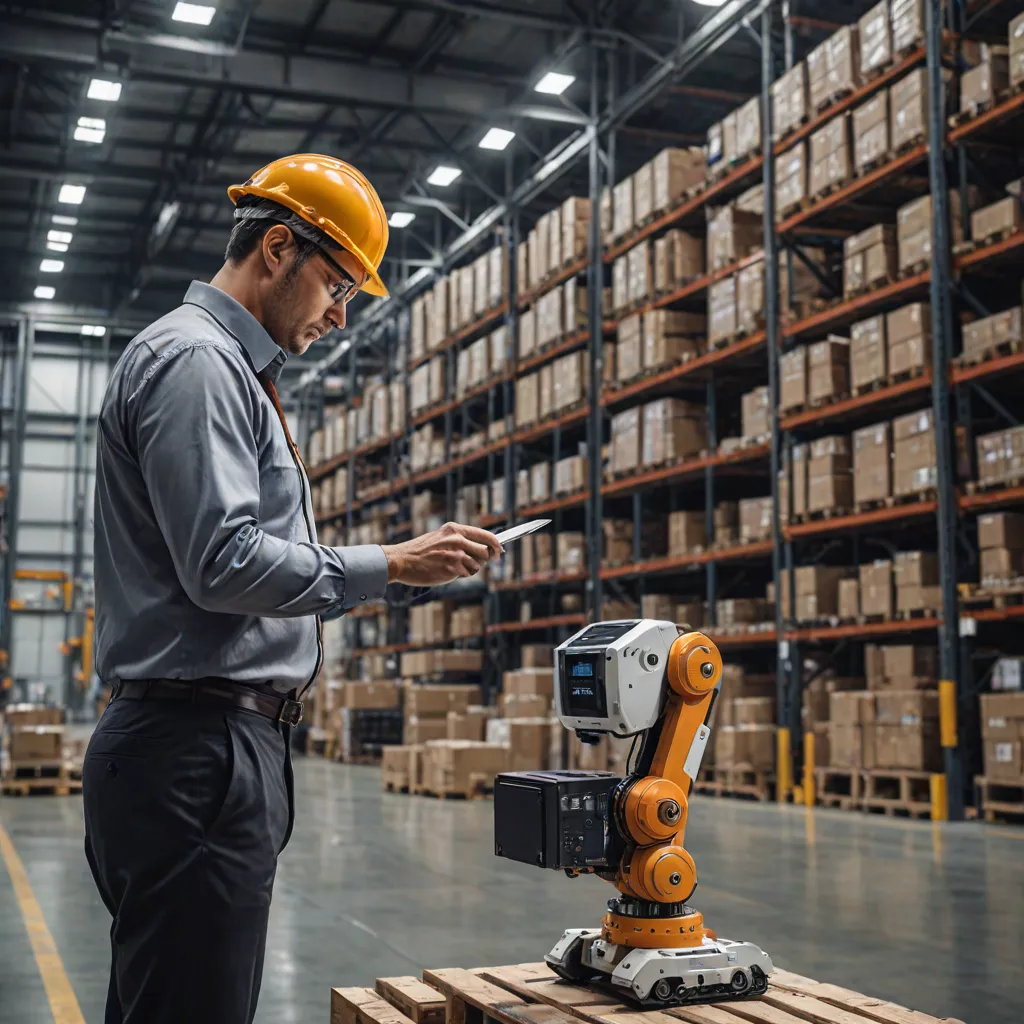
Understanding the Benefits of Multi-Tier Robotic Warehouses
Implementing multi-tier robotic warehouses can significantly enhance logistics efficiency, reduce costs, and improve inventory management, ultimately leading to increased customer satisfaction and loyalty.
The integration of automation and robotics in warehouses has revolutionized the logistics industry. Multi-tier robotic warehouses, in particular, offer numerous benefits, including increased storage capacity, improved inventory turnover, and reduced labor costs. By leveraging robotic technology, businesses can streamline their logistics operations, enhance efficiency, and drive cost savings.
One of the primary advantages of multi-tier robotic warehouses is their ability to optimize storage capacity. By stacking inventory on multiple tiers, businesses can significantly reduce their warehouse footprint, resulting in lower real estate costs. Additionally, robotic technology enables faster and more accurate picking and packing, reducing labor costs and improving order fulfillment rates.
The implementation of multi-tier robotic warehouses also enables businesses to improve their inventory management. With advanced inventory management systems, businesses can track inventory levels in real-time, ensuring that stock levels are optimized and reducing the risk of stockouts or overstocking.
💡 Executive Insight: To maximize the benefits of multi-tier robotic warehouses, businesses should consider implementing a warehouse management system (WMS) that integrates with their existing enterprise resource planning (ERP) system, enabling seamless data exchange and optimized inventory management.
Calculating the Financial Payback of Upgrading to Multi-Tier Robotic Warehouses
The financial payback of upgrading to multi-tier robotic warehouses depends on various factors, including the size of the warehouse, the level of automation, and the expected return on investment (ROI), which can range from 2-5 years.
Calculating the financial payback of upgrading to multi-tier robotic warehouses requires a comprehensive analysis of various financial and operational factors. The initial investment costs, including the cost of infrastructure, technology, and implementation, must be weighed against the expected benefits, including cost savings, increased efficiency, and improved inventory management.
The following table provides a general outline of the key financial parameters to consider when evaluating the payback of upgrading to multi-tier robotic warehouses:
| Financial Parameter | Description | Value |
|---|---|---|
| Initial Investment Cost | Total cost of infrastructure, technology, and implementation | $1.5 million - $5 million |
| Annual Labor Savings | Reduction in labor costs due to automation | $200,000 - $500,000 |
| Annual Inventory Savings | Reduction in inventory costs due to improved management | $100,000 - $300,000 |
| Annual Efficiency Gains | Increase in productivity and efficiency | 10% - 20% |
| ROI | Return on investment (payback period) | 2-5 years |
Assessing the Operational Benefits of Multi-Tier Robotic Warehouses
Multi-tier robotic warehouses offer numerous operational benefits, including improved inventory accuracy, reduced order fulfillment times, and enhanced scalability, enabling businesses to respond quickly to changing market demands.
The operational benefits of multi-tier robotic warehouses are numerous and significant. One of the primary advantages is improved inventory accuracy, which can be achieved through the use of advanced inventory management systems and robotic technology. This enables businesses to track inventory levels in real-time, reducing the risk of stockouts or overstocking.
Another significant operational benefit is reduced order fulfillment times. With robotic technology, businesses can automate the picking and packing process, enabling faster and more accurate order fulfillment. This can lead to increased customer satisfaction and loyalty.
Multi-tier robotic warehouses also offer enhanced scalability, enabling businesses to respond quickly to changing market demands. With the ability to easily expand or contract warehouse capacity, businesses can adapt to fluctuations in demand, reducing the risk of lost sales or overstocking.
💡 Executive Insight: To maximize the operational benefits of multi-tier robotic warehouses, businesses should consider implementing a robust warehouse management system (WMS) that integrates with their existing supply chain systems, enabling seamless data exchange and optimized inventory management.
Evaluating the Technical Advantages of Multi-Tier Robotic Warehouses
Multi-tier robotic warehouses offer numerous technical advantages, including improved inventory management, enhanced efficiency, and reduced labor costs, which can be achieved through the integration of advanced technologies, such as artificial intelligence (AI) and machine learning (ML).
The technical advantages of multi-tier robotic warehouses are significant, and can be achieved through the integration of advanced technologies, such as AI and ML. One of the primary technical advantages is improved inventory management, which can be achieved through the use of advanced inventory management systems and predictive analytics.
Another significant technical advantage is enhanced efficiency, which can be achieved through the automation of various warehouse operations, such as picking and packing. This can lead to reduced labor costs and improved productivity.
The integration of AI and ML technologies also enables businesses to optimize their warehouse operations, predicting and adapting to changing market demands. This can lead to improved customer satisfaction and loyalty.
Addressing the Challenges and Constraints of Implementing Multi-Tier Robotic Warehouses
Implementing multi-tier robotic warehouses can be challenging, with high upfront investment costs, technical complexities, and the need for specialized labor and training, which must be carefully evaluated and addressed.
The implementation of multi-tier robotic warehouses can be challenging, with various constraints and challenges that must be carefully evaluated and addressed. One of the primary challenges is high upfront investment costs, which can be significant.
Another significant challenge is technical complexity, which can arise from the integration of advanced technologies, such as AI and ML. This requires specialized labor and training, which can be time-consuming and costly.
Businesses must also consider the need for specialized labor and training, which can be a constraint. This requires careful planning and execution, ensuring that personnel are adequately trained and equipped to operate and maintain the warehouse.
💡 Executive Insight: To address the challenges and constraints of implementing multi-tier robotic warehouses, businesses should consider partnering with experienced technology providers and logistics experts, who can provide guidance and support throughout the implementation process.
Conclusion
Upgrading to multi-tier robotic warehouses can offer significant financial and operational benefits, including improved efficiency, reduced costs, and enhanced scalability, which can be achieved through careful planning, evaluation, and implementation.
In conclusion, upgrading to multi-tier robotic warehouses can offer significant financial and operational benefits, which can be achieved through careful planning, evaluation, and implementation. By understanding the benefits and challenges of multi-tier robotic warehouses, businesses can make informed decisions about their logistics infrastructure, driving cost savings, efficiency gains, and improved customer satisfaction.