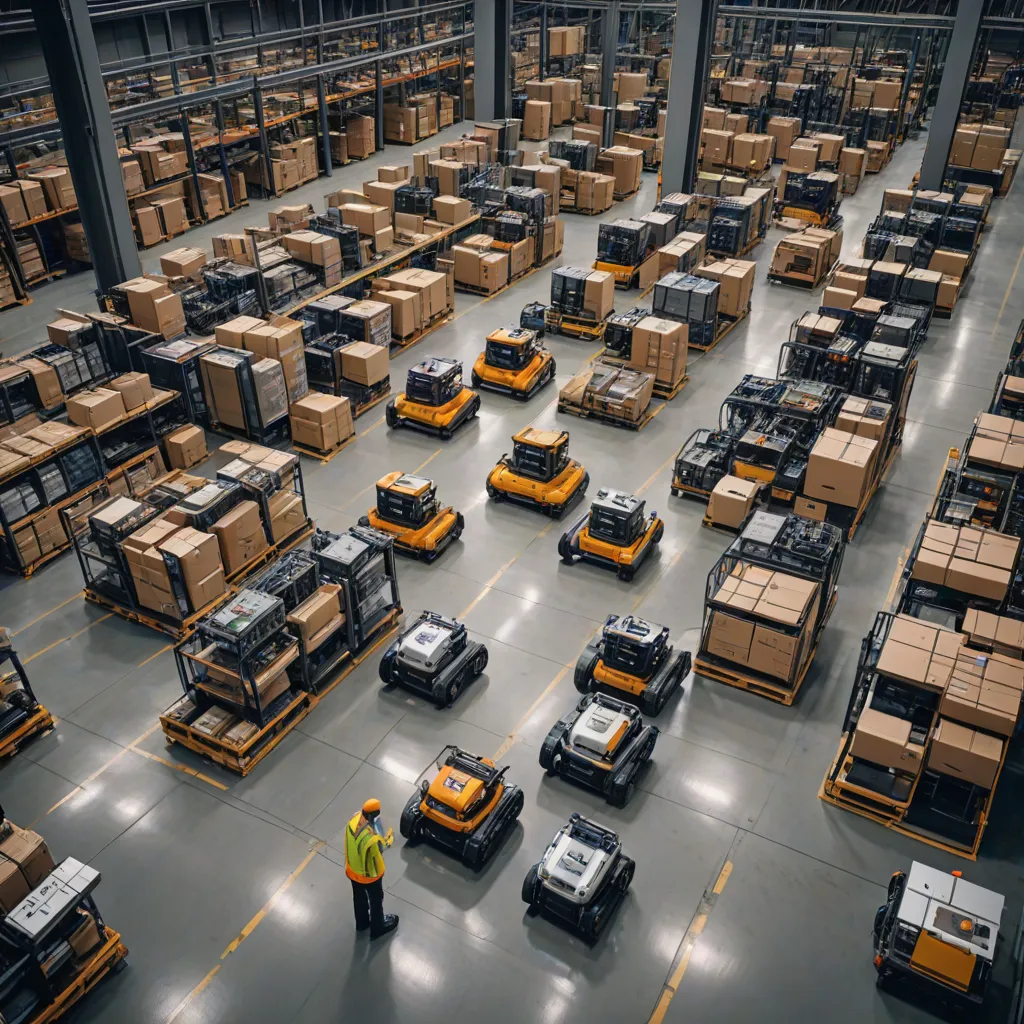
Introduction to Autonomous Mobile Robots (AMRs) in Warehousing
Autonomous Mobile Robots (AMRs) are revolutionizing warehouse operations by efficiently navigating complex high-density racking layouts, optimizing storage capacity, and reducing labor costs. With advanced navigation systems and artificial intelligence, AMRs can adapt to dynamic warehouse environments, improving overall efficiency and productivity.
The increasing demand for efficient and cost-effective warehouse operations has led to the adoption of Autonomous Mobile Robots (AMRs) in various industries. AMRs are designed to navigate complex warehouse environments, including high-density racking layouts, to optimize storage capacity and reduce labor costs. In this guide, we will explore how AMRs navigate complex high-density racking layouts, their benefits, and the challenges associated with their implementation.
Navigation Systems for AMRs in High-Density Racking Layouts
AMRs employ advanced navigation systems, including lidar, SLAM, and barcode scanning, to efficiently navigate high-density racking layouts and avoid collisions. These systems enable AMRs to adapt to dynamic warehouse environments and optimize storage capacity.
AMRs use various navigation systems to move through high-density racking layouts. Lidar (Light Detection and Ranging) technology uses laser sensors to create a 3D map of the warehouse environment, allowing AMRs to detect obstacles and navigate through narrow aisles. SLAM (Simultaneous Localization and Mapping) technology enables AMRs to build a map of the warehouse environment while simultaneously localizing themselves within it. Barcode scanning and RFID technology can also be used to track inventory and navigate through the warehouse.
Benefits of AMRs in High-Density Racking Layouts
The implementation of AMRs in high-density racking layouts offers numerous benefits, including increased storage capacity, reduced labor costs, and improved productivity. AMRs can navigate through narrow aisles and optimize storage capacity, reducing the need for manual labor and improving overall efficiency.
The benefits of AMRs in high-density racking layouts are numerous. One of the primary advantages is increased storage capacity. By navigating through narrow aisles and optimizing storage capacity, AMRs can help warehouses store more inventory in a smaller footprint. This can lead to significant cost savings and improved efficiency. Additionally, AMRs can reduce labor costs by automating material handling and transportation tasks.
💡 Executive Insight: To maximize the benefits of AMRs in high-density racking layouts, consider implementing a hybrid approach that combines AMRs with traditional automation solutions, such as conveyor belts and sorters. This can help optimize warehouse operations and reduce costs.
Challenges and Limitations of AMRs in High-Density Racking Layouts
Despite the benefits, there are challenges and limitations associated with implementing AMRs in high-density racking layouts, including high upfront costs, integration with existing warehouse management systems, and safety concerns.
While AMRs offer numerous benefits, there are challenges and limitations associated with their implementation. One of the primary challenges is high upfront costs. The cost of purchasing and implementing AMRs can be significant, and integrating them with existing warehouse management systems can be complex. Additionally, safety concerns must be addressed, as AMRs operate in close proximity to human workers.
Comparison of AMR Vendors and Their Navigation Systems
| Vendor | Navigation System | Accuracy | Speed | Cost |
|---|---|---|---|---|
| Vendor A | Lidar | 95% | 1.5 m/s | $100,000 |
| Vendor B | SLAM | 92% | 1.2 m/s | $80,000 |
| Vendor C | Barcode Scanning | 90% | 1.0 m/s | $60,000 |
| Vendor D | RFID | 88% | 0.8 m/s | $40,000 |
The table above compares different AMR vendors and their navigation systems. The accuracy, speed, and cost of each vendor's system are listed. Vendor A offers a lidar-based system with high accuracy and speed, but at a higher cost. Vendor B offers a SLAM-based system with lower accuracy and speed, but at a lower cost.
Conclusion
In conclusion, Autonomous Mobile Robots (AMRs) can efficiently navigate complex high-density racking layouts, optimizing storage capacity and reducing labor costs. While there are challenges and limitations associated with their implementation, the benefits of AMRs make them an attractive solution for warehouses looking to improve efficiency and productivity.
In conclusion, AMRs offer a promising solution for warehouses looking to optimize storage capacity and reduce labor costs. By understanding the navigation systems, benefits, and challenges associated with AMRs, warehouses can make informed decisions about implementing these technologies. With the right approach and vendor, AMRs can help warehouses improve efficiency, productivity, and overall competitiveness.