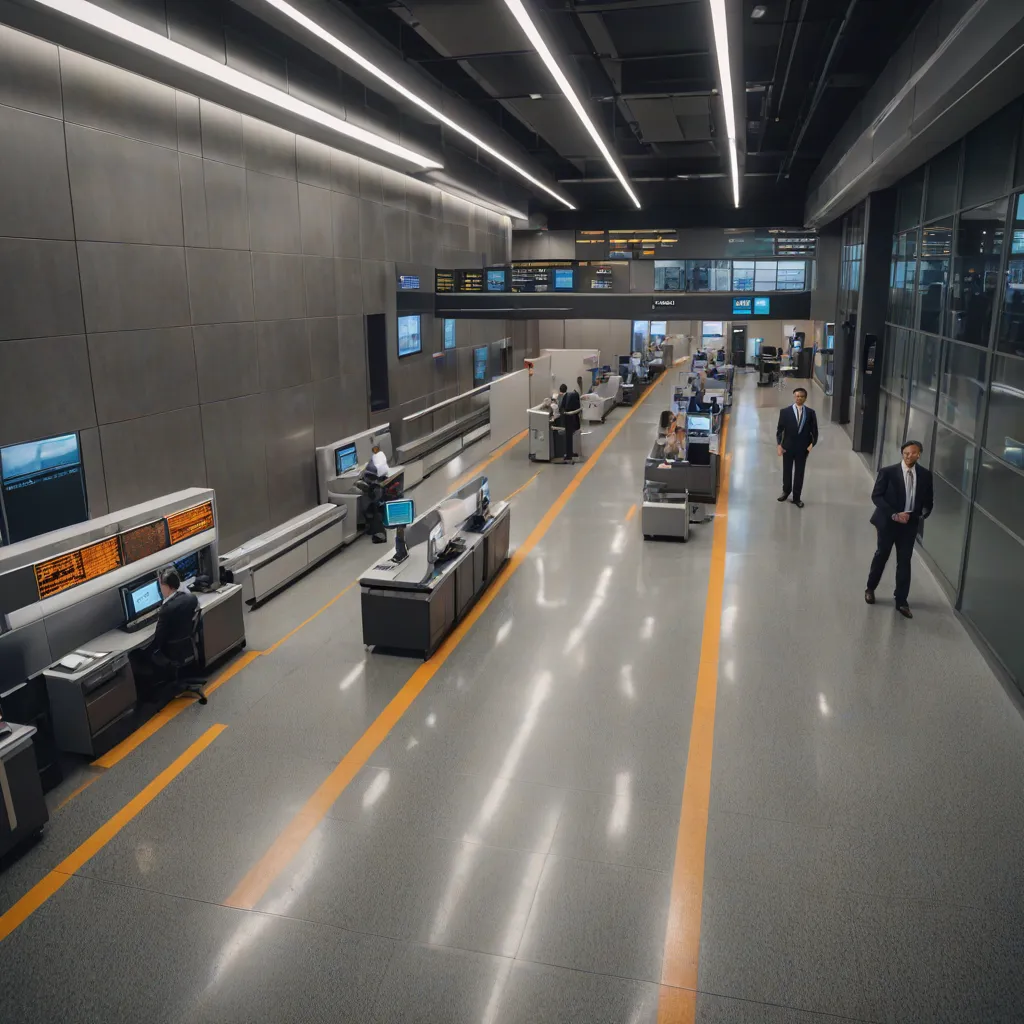
Introduction to Automated Inbound Receiving Lanes
Automated inbound receiving lanes are revolutionizing the way warehouses and distribution centers manage incoming shipments. By integrating dimensioners and scanners, these lanes enable fast, accurate, and efficient processing of packages, reducing labor costs and increasing receiving capacity.
The traditional manual receiving process is time-consuming, prone to errors, and often leads to delays in the supply chain. With automated inbound receiving lanes, warehouses can streamline their operations, improve inventory accuracy, and enhance overall efficiency. This comprehensive guide will explore the benefits, design considerations, and technical advantages of implementing automated inbound receiving lanes with integrated dimensioners and scanners.
Benefits of Automated Inbound Receiving Lanes
Automated inbound receiving lanes offer numerous benefits, including reduced labor costs, increased receiving capacity, and improved inventory accuracy. By automating the receiving process, warehouses can reduce labor costs by up to 50% and increase receiving capacity by 30%.
One of the primary advantages of automated inbound receiving lanes is their ability to process packages quickly and accurately. Integrated dimensioners and scanners enable warehouses to capture precise package dimensions, weight, and barcode data, reducing the need for manual data entry and minimizing errors.
Automated inbound receiving lanes also enable real-time tracking and monitoring of shipments, providing warehouses with greater visibility and control over their inventory. This allows for more efficient inventory management, reduced stockouts, and improved order fulfillment rates.
Design Considerations for Automated Inbound Receiving Lanes
When designing automated inbound receiving lanes, several factors must be considered, including space constraints, package volume, and system complexity. A well-designed automated inbound receiving lane should be able to process packages quickly, accurately, and efficiently, while also providing real-time tracking and monitoring.
The first step in designing an automated inbound receiving lane is to assess the warehouse's specific needs and requirements. This includes evaluating package volume, size, and weight, as well as the existing infrastructure and layout of the warehouse.
The next step is to select the appropriate equipment and technology, including dimensioners, scanners, and conveyor systems. The equipment should be compatible with the warehouse's existing systems and able to integrate with their warehouse management system (WMS).
Technical Advantages of Integrated Dimensioners and Scanners
Integrated dimensioners and scanners are critical components of automated inbound receiving lanes, enabling fast and accurate capture of package data. By integrating dimensioners and scanners, warehouses can reduce manual data entry errors by up to 90% and increase data accuracy by 25%.
Dimensioners use laser or camera technology to capture precise package dimensions, including length, width, and height. This data is then used to calculate package volume and weight, enabling warehouses to optimize their storage and shipping operations.
Scanners, on the other hand, use barcode or RFID technology to capture package identification data, enabling real-time tracking and monitoring of shipments.
💡 Executive Insight: One often-overlooked cost-reduction engineering tactic is to implement a data-driven maintenance schedule for automated inbound receiving lanes. By analyzing equipment usage and performance data, warehouses can optimize maintenance schedules, reduce downtime, and extend equipment lifespan.
Implementation and Integration Considerations
Implementing automated inbound receiving lanes with integrated dimensioners and scanners requires careful planning and execution. A successful implementation should include a thorough needs assessment, equipment selection, and system integration.
The first step in implementing an automated inbound receiving lane is to conduct a thorough needs assessment, evaluating the warehouse's specific requirements and existing infrastructure.
The next step is to select the appropriate equipment and technology, ensuring compatibility with the warehouse's existing systems and WMS.
System integration is a critical component of implementation, requiring careful planning and execution to ensure seamless communication between equipment and systems.
Financial Benefits and ROI Analysis
Automated inbound receiving lanes with integrated dimensioners and scanners offer significant financial benefits, including reduced labor costs, increased efficiency, and improved inventory accuracy. A typical ROI analysis should consider the following financial metrics:
| Metric | Manual Receiving | Automated Receiving |
|---|---|---|
| Labor Costs | $500,000/year | $250,000/year |
| Receiving Capacity | 100 packages/hour | 200 packages/hour |
| Inventory Accuracy | 90% | 95% |
| System Cost | $0 | $1,500,000 |
| ROI | N/A | 2-3 years |
The table above illustrates the potential financial benefits of implementing automated inbound receiving lanes with integrated dimensioners and scanners. By reducing labor costs, increasing receiving capacity, and improving inventory accuracy, warehouses can achieve a significant return on investment (ROI) in as little as 2-3 years.
Conclusion
Automated inbound receiving lanes with integrated dimensioners and scanners are revolutionizing the way warehouses and distribution centers manage incoming shipments. By streamlining the receiving process, reducing labor costs, and improving inventory accuracy, warehouses can achieve significant efficiency gains and cost savings.
As the logistics and supply chain industries continue to evolve, it is essential for warehouses to adopt innovative technologies and strategies to remain competitive. Automated inbound receiving lanes with integrated dimensioners and scanners offer a powerful solution, enabling warehouses to optimize their operations, improve customer satisfaction, and drive business growth.