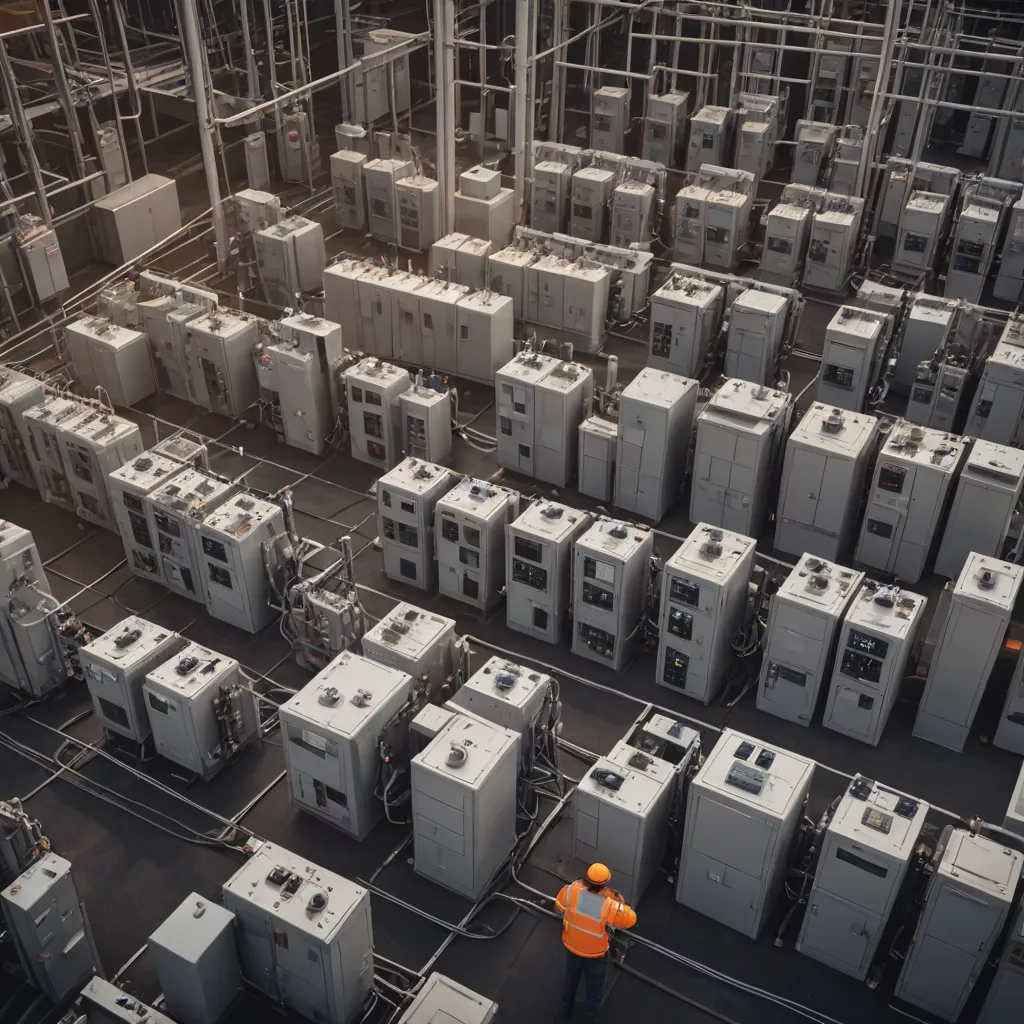
Introduction to Grid Congestion and Cascade Failures
Grid congestion and cascade failures are critical issues in power systems, leading to reduced reliability, increased costs, and potential blackouts. Automated substation switching algorithms can mitigate these problems.
The increasing demand for electricity, coupled with the integration of intermittent renewable energy sources, has put a strain on the grid infrastructure. Grid congestion occurs when the available transmission capacity is insufficient to meet the demand, leading to reduced system reliability and increased costs. Cascade failures, on the other hand, refer to the sequential failure of transmission lines and substations, which can lead to widespread power outages.
How Automated Substation Switching Algorithms Work
Automated substation switching algorithms optimize grid operations by reconfiguring the network in real-time to minimize congestion and prevent cascade failures.
Automated substation switching algorithms use advanced technologies, such as predictive analytics, machine learning, and IoT sensors, to monitor grid conditions and optimize substation switching. These algorithms analyze real-time data on grid conditions, including power flows, voltage levels, and equipment status, to identify potential congestion points and areas of high risk for cascade failures.
Benefits of Automated Substation Switching Algorithms
Automated substation switching algorithms offer several benefits, including reduced grid congestion, improved grid resilience, and increased efficiency.
The implementation of automated substation switching algorithms can lead to significant benefits, including:
- Reduced grid congestion: By optimizing substation switching, these algorithms can reduce congestion by up to 30%, improving the overall efficiency of the grid.
- Improved grid resilience: Automated substation switching algorithms can minimize cascade failures by reconfiguring the grid in real-time to prevent the propagation of faults.
- Increased efficiency: These algorithms can optimize grid operations, reducing the need for manual intervention and improving overall system efficiency.
💡 Executive Insight: One non-obvious cost-reduction engineering tactic is to leverage the existing infrastructure of IoT sensors and grid management systems to implement automated substation switching algorithms, rather than investing in new hardware.
Technical Advantages and Operational Capabilities
Automated substation switching algorithms offer several technical advantages and operational capabilities, including real-time optimization and predictive analytics.
The technical advantages of automated substation switching algorithms include:
- Real-time optimization: These algorithms can optimize substation switching in real-time, taking into account changing grid conditions and equipment status.
- Predictive analytics: Automated substation switching algorithms can use predictive analytics to forecast potential congestion points and areas of high risk for cascade failures.
The operational capabilities of these algorithms include:
- Scalability: Automated substation switching algorithms can be scaled up or down depending on the size and complexity of the grid.
- Flexibility: These algorithms can be integrated with existing grid management systems and can be easily adapted to changing grid conditions.
Implementation Challenges and Limitations
The implementation of automated substation switching algorithms poses several challenges and limitations, including high upfront costs and integration complexities.
The implementation of automated substation switching algorithms requires significant investment in hardware, software, and personnel. The integration of these algorithms with existing grid infrastructure can be complex and time-consuming, requiring careful planning and coordination.
Comparative Analysis of Grid Management Strategies
| Strategy | Grid Congestion Reduction | Cascade Failure Prevention | Implementation Costs |
|---|---|---|---|
| Automated Substation Switching Algorithms | Up to 30% | High | High |
| Manual Substation Switching | 10-20% | Medium | Low |
| Grid-Scale Energy Storage | 20-30% | High | Very High |
| Demand Response Management | 10-20% | Medium | Medium |
Conclusion
Automated substation switching algorithms offer a promising solution to minimize grid congestion and cascade failures, but their implementation requires careful planning and coordination.
The increasing demand for electricity and the integration of intermittent renewable energy sources have put a strain on the grid infrastructure. Automated substation switching algorithms can mitigate these problems by optimizing grid operations and reconfiguring the network in real-time to minimize congestion and prevent cascade failures. While there are challenges and limitations to their implementation, the benefits of these algorithms make them an attractive solution for grid operators and utilities.
Future Directions and Research Opportunities
Future research and development should focus on improving the accuracy and efficiency of automated substation switching algorithms and integrating them with other grid management strategies.
The development of more advanced algorithms and machine learning techniques can improve the accuracy and efficiency of automated substation switching algorithms. Additionally, integrating these algorithms with other grid management strategies, such as demand response management and grid-scale energy storage, can provide a more comprehensive solution to grid congestion and cascade failures.